Haldi Kumkum 2027: The Sankranti Dates and What to Wear
Haldi Kumkum 2027 runs from Makar Sankranti on 15 January to Ratha Saptami on 13 February: the dates, the customs and the jewellery to wear.
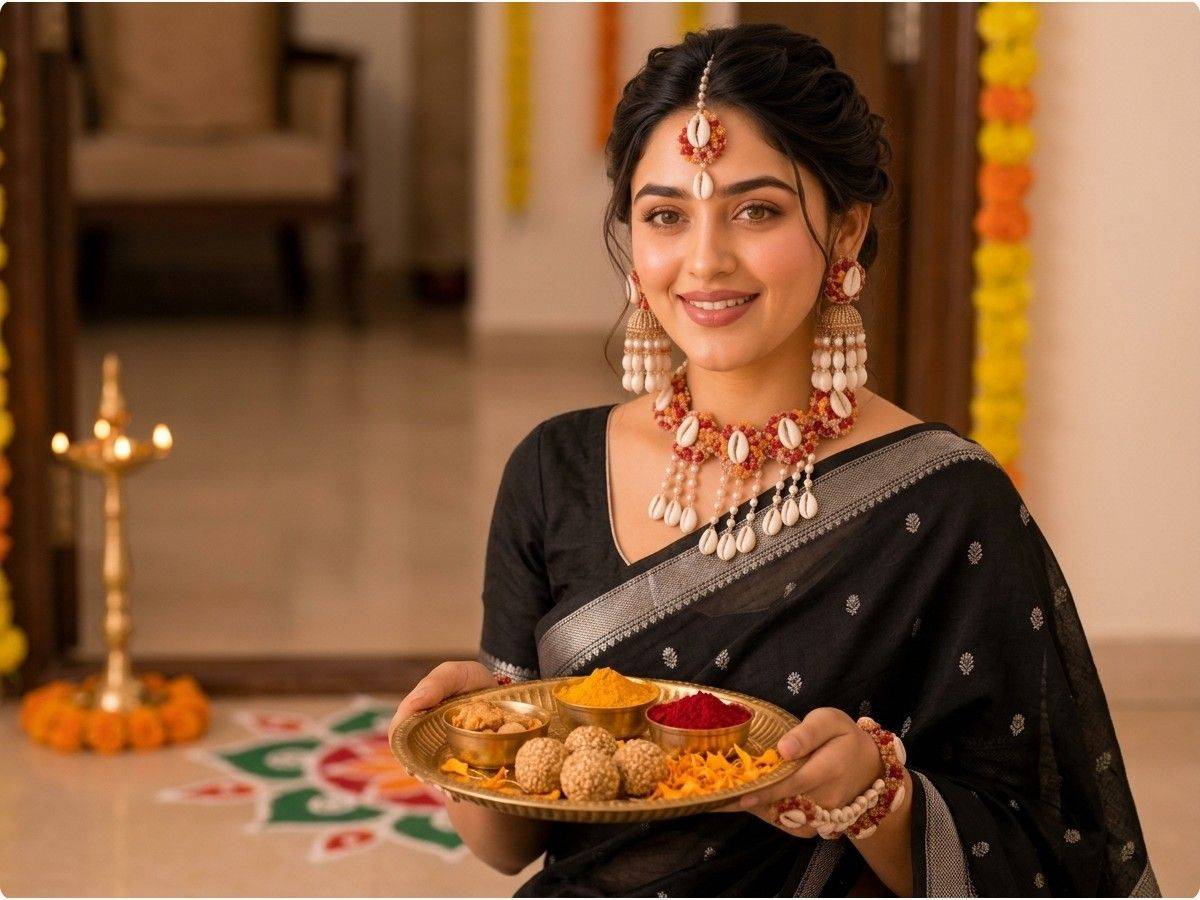
Haldi Kumkum 2027 season begins on Makar Sankranti, Friday 15 January on the Drik Panchang calendar for New Delhi, and runs until Ratha Saptami on Saturday 13 February. Women host and visit through those weeks. For a Haldi Kumkum, wear one light floral or shell set that stands out against a black or festive saree.
This guide is for women hosting or attending a Haldi Kumkum this Sankranti, and for new brides celebrating their first Sankranti. It gives the dates with their source, explains how the gathering works, and suggests what to wear. For matching a set to an outfit colour, read our guide on how to choose haldi jewellery.
The Haldi Kumkum dates in January and February 2027
Haldi Kumkum is not a single day. In Maharashtra and nearby regions it is held on any convenient day from Makar Sankranti to Ratha Saptami, and most families pick a weekend. Confirm the days your family keeps with your elders.
Makar Sankranti: Friday 15 January
Drik Panchang lists Makar Sankranti 2027 on Friday 15 January for New Delhi. The Sankranti moment is at 9:14 PM on Thursday 14 January, and the punya kaal runs from 7:15 AM to 5:46 PM on the 15th. Many families hold the first Haldi Kumkum on Sankranti itself or on the weekend after it.
Ratha Saptami: Saturday 13 February
Ratha Saptami falls on Saturday 13 February 2027, on the Prokerala calendar for Ujjain. It is traditionally the last day of the Haldi Kumkum season.
The weekends in between
Between the two dates there are four full weekends: 16 and 17 January, 23 and 24 January, 30 and 31 January, and 6 and 7 February. If you are hosting, fix your day early so it does not clash with a neighbour's.
How a Haldi Kumkum works
The host invites married women from the family and neighbourhood. Each guest is welcomed with a touch of haldi and kumkum on the forehead, given tilgul with the words "tilgul ghya, god god bola", and sent home with a small gift called vaan. The vaan is often a useful household item, and hosts take pride in choosing it.
The gathering is relaxed: guests come and go through the afternoon or evening, sit together over snacks, and the host greets each one at the door. That makes it a long event for the host, and a short visit for each guest.
Haldi Kumkum is also held at other times of the year, such as during Chaitra Gauri, but the Sankranti season is the best known.
What to wear for Haldi Kumkum
Many women wear a black saree on Sankranti, a custom tied to the cold season, often a chandrakala saree with small motifs. Others choose a bright Paithani or a silk saree. The jewellery has to stand out against the saree and stay comfortable through a long afternoon of greeting guests.
For a black saree
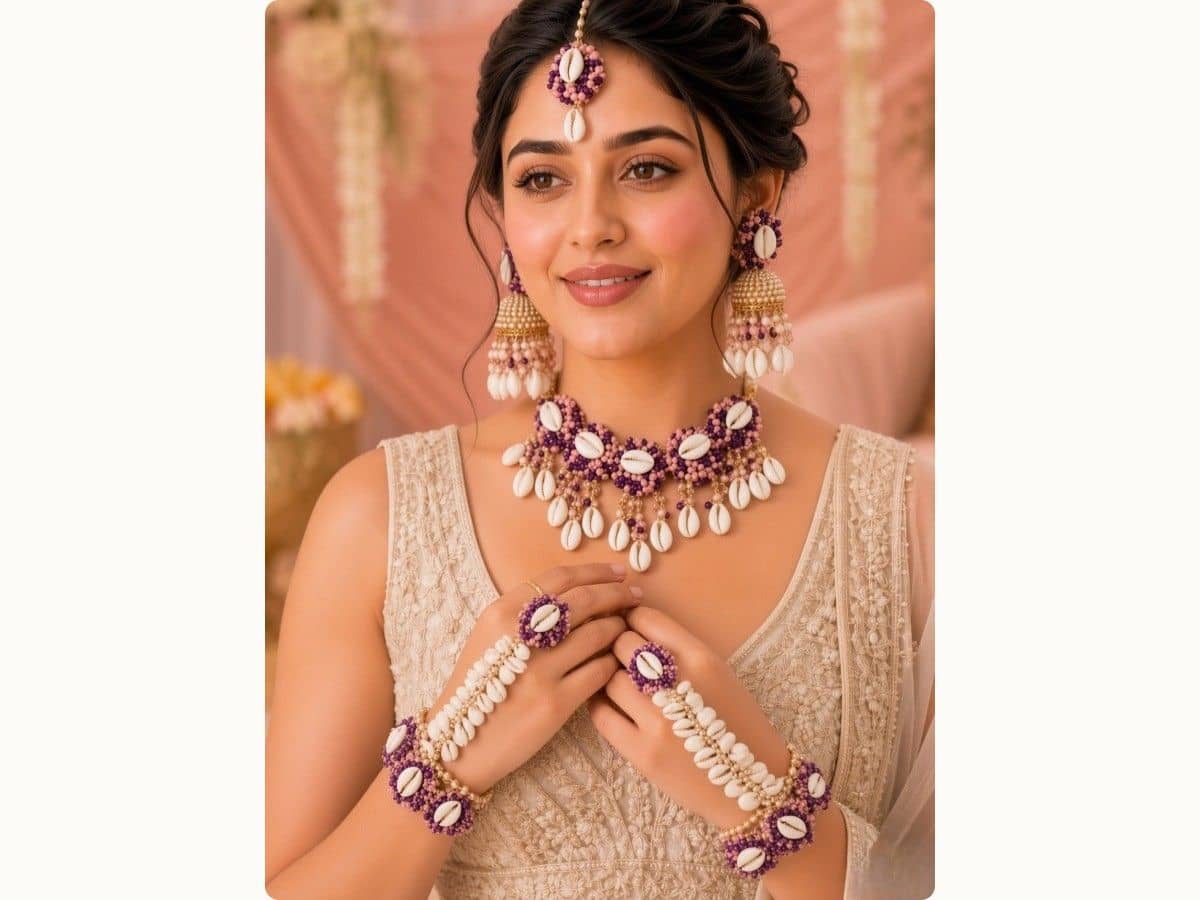
Black makes light colours stand out. Pink and white flowers or shell read clearly against it. The Blooming Shell Rose jewellery set is a pink shell and flower set. The handcrafted white floral set with green crystal drops is a white flower and pearl set.
For a bright silk or Paithani
A bright saree already carries colour, so choose a softer set. The lavender-pink sea shell floral jewellery set is a pastel shell set that will not fight a strong border. Our sea shell and cowrie jewellery guide explains how shell sets pair with silk.
For the host
The host stands, greets and serves for hours. Earrings and a light necklace are enough, and our haldi earrings and hairstyles guide shows which earrings suit a bun or an open braid.
For mothers, daughters and grandmothers together
Haldi Kumkum brings women of every age together. The Heer pearl and cowrie shell set is named for all ages, so the same style can be worn by everyone in the family.
A new bride's first Sankranti

A bride's first Sankranti after her wedding is celebrated in a bigger way in many Maharashtrian families. She often wears a black saree and halwyache dagine, jewellery made of sugar-coated sesame beads, for a special photograph and the first Haldi Kumkum she hosts.
We do not make sugar jewellery. For the other Haldi Kumkum gatherings of the season, a floral or shell set from the sections above gives the new bride a fresh look on each visit.
What to check before you order
Do this on the product page, because it differs from set to set.
- The photographs. Look at every photo, because the pieces on the model show what the set contains.
- The title and description. Read the product details to see the material and which pieces the set includes.
- Your own saree. Hold the product photos beside your saree in daylight, because black and bright silks change how a colour reads.
- Your date. Count back from your Haldi Kumkum day when you order, and ask about delivery to your city through the contact page.
Where to look in our collections
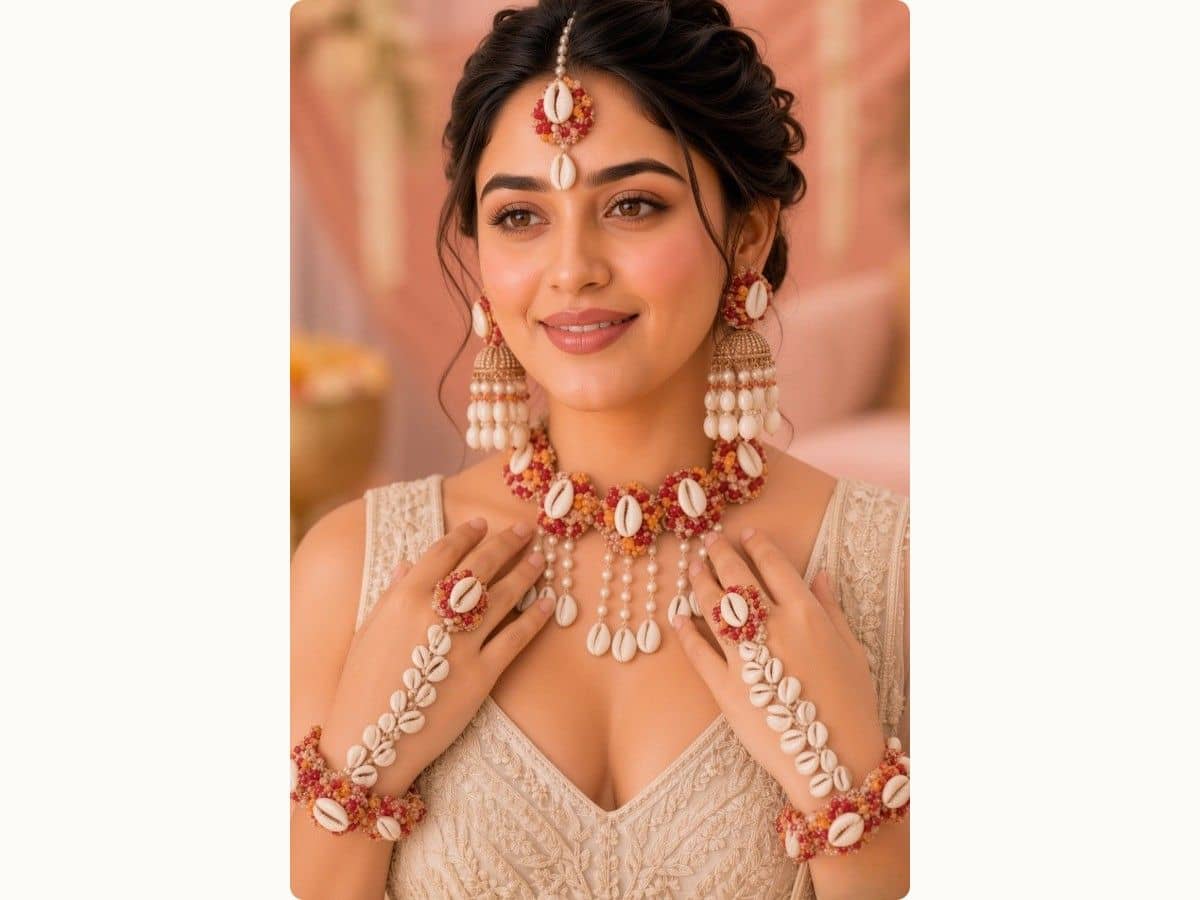
Browse our handmade flower jewellery for floral sets and our sea shell jewellery sets for shell and cowrie pieces.
Final thoughts
The Haldi Kumkum season of 2027 runs from Makar Sankranti on Friday 15 January to Ratha Saptami on Saturday 13 February. Fix your hosting day early, and choose one light floral or shell set that stands out against your saree and stays comfortable for a long afternoon.
Quick checklist
- Pick your hosting day between 15 January and 13 February.
- Plan the vaan and tilgul before the day.
- Choose a light colour against a black saree.
- Choose a softer set against a bright silk.
- Keep the host's jewellery light.
- Order early enough to try the set with your saree.
About the Author
Aditya Kumar
Frequently Asked Questions
When is Haldi Kumkum in 2027?
The season begins on Makar Sankranti, Friday 15 January 2027 on Drik Panchang for New Delhi, and ends on Ratha Saptami, Saturday 13 February 2027. Families host on any day in between.
When is Makar Sankranti in 2027?
Drik Panchang lists Makar Sankranti on Friday 15 January 2027 for New Delhi, with the Sankranti moment at 9:14 PM on 14 January.
Why do women wear black on Sankranti?
In Maharashtra, wearing black on Sankranti is a long-standing custom tied to the cold season. Many women wear a black chandrakala saree for the day.
What is vaan at a Haldi Kumkum?
Vaan is the small gift the host gives each guest as she leaves, along with haldi, kumkum and tilgul.
What jewellery suits a Haldi Kumkum?
One light floral or shell set. Choose pink, white or pastel against a black saree, and a softer set against a bright silk or Paithani.
Comments (0)
Please log in to post comments and replies.